Life Skills Development NDIS Australia 2026: Practical Support for Independence

Wonder Care Australia Pty Ltd ClientGdayBroadcast • April 22, 2026

In the ever-evolving landscape of the National Disability Insurance Scheme (NDIS), 2026 marks a pivotal year for participants focused on one core objective: independence. For many Australians living with a disability, the ultimate goal is not just receiving care, it is building the capability to manage life on their own terms. 


Whether you are living in the heart of Toowoomba or the surrounding Darling Downs region, life skills development NDIS categories are designed to be the bridge between basic assistance and true self-reliance. At Wonder Care Australia, we have seen firsthand how the right skill building daily routines can transform a person’s confidence, opening doors to employment, social connection, and a sense of pride that only comes from autonomy. 


The guide will explain how NDIS development life skills operate in 2026 and provide information about person-centred life skills support and demonstrate why independence training in Australia should be your primary focus in NDIS planning throughout this year. 


Understanding Life Skills Development Under the NDIS 


At its core, life skills development NDIS is synonymous with capacity building. This funding system provides specific support which teaches you essential self-care skills through dedicated financial resources. 


The 2026 NDIS guidelines establish renewed emphasis on NDIS Daily Living Skills. The NDIA (National Disability Insurance Agency) now designates primary importance to supports that deliver long-term value because these solutions enable participants to achieve independence through the acquisition of daily living skills. 


Key Focus Areas of Life Skill Disability Support 


  • Personal Care and Hygiene: The student needs to acquire skills for showering, grooming, and dressing without assistance. 
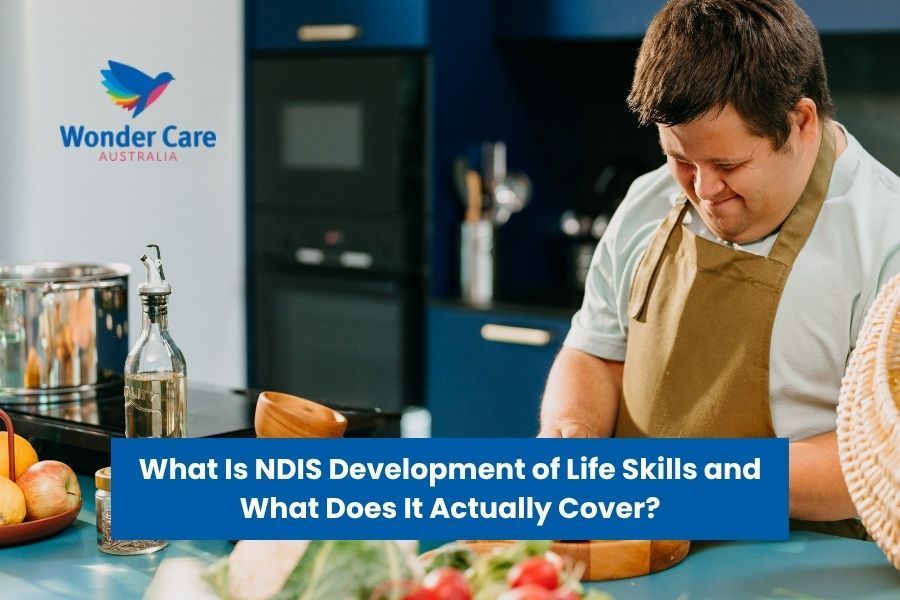
  • Nutrition and Culinary Skills: The student needs to learn three skills which involve meal planning and grocery shopping on a budget and safe food preparation. 
  • Household Management: The student needs to learn three essential skills which include mastering laundry and cleaning and basic home maintenance. 
  • Financial Literacy: The student needs to learn three financial skills which include budgeting NDIS funds and managing bank accounts and paying bills. 
  • Communication and Mobility: The student needs to learn three skills which include using public transportation and digital tools and developing social confidence. 

Why 2026 is the Year for Independence Training in Australia 


The NDIS has undergone a significant strategic shift. The focus has moved away from passive care and toward proactive independence training in Australia. Empowerment is the primary objective. 

When you allocate your plan budget into NDIS development life skills, you are not simply paying for a presence in the room. You are investing in a mentor—a support worker who utilises a person-centred life skills support approach to teach you the methodology behind every task. 


The Strategic Benefits of Skill Building Daily Routines 


  1. Enhanced Confidence: Achieving milestones like cooking a full meal or navigating the Toowoomba bus network independently fosters immense self-worth. 
  2. Improved Health Outcomes: Understanding nutrition and maintaining a consistent routine leads to superior physical and mental health. 
  3. Community Integration: Developing life skills often requires engagement with the local community, which naturally reduces social isolation. 
  4. Plan Sustainability: By increasing independence, you may reduce the need for high intensity support in the future, allowing your plan to focus on aspirational goals like employment or travel. 

How to Access NDIS Development Life Skills Funding 


Navigating funding categories is often a hurdle for participants. Generally, life skills development NDIS falls under the Capacity Building budget, specifically the Development of Daily Living and Life Skills category. 


1. Define Your Objectives 


Before your next NDIS plan meeting or reassessment, consider what independence means for you. Whether it is moving into independent living or starting a small business, your goals must be reasonable and necessary while directly linking to the skills you wish to acquire. 


2. Use Precise Language 


You should use professional terms which include independence training and skill building for daily routines when you talk about your requirements to a Local Area Coordinator LAC or Plan Manager. The person requires active assistance instead of receiving standard caregiving services. 


3. Select a Specialist Provider 


In Toowoomba, Wonder Care Australia specialises in person-centred life skills support. We do not apply for a generic checklist. We work together with you to discover your learning objectives and determine the most suitable learning methods for you. 


Person-Centred Life Skills Support: The Wonder Care Methodology 


The term person-centred signifies that the participant is the architect of their own support. Cooking through recipes is not enough for Toowoomba participants because they need to learn cooking skills. We: 


  • Assess the kitchen environment for accessibility requirements. 
  • Assist with grocery shopping to identify items that fit your budget. 
  • Work at your preferred pace, ensuring skills are retained. 
  • Focus on the progress made during every session. 

Life Skill Disability Support is about fostering a professional relationship where you feel empowered to attempt new tasks and eventually master them. 


Mastering NDIS Daily Living Skills: A Structured Approach 


To ensure life skills development NDIS is effective, we recommend a scaffolded learning approach. This is how we help our clients in Toowoomba achieve sustainable results: 


Phase 1: Observation 


The support worker performs the task while explaining each step in detail. The participant observes and clarifies any points of uncertainty. 


Phase 2: Collaboration 


The participants and support workers complete the task together. This joint effort builds muscle memory and reduces the pressure of performing a new task alone. 


Phase 3: Supervision 


The participant performs the task while the support worker provides oversight for safety and guidance. This is a critical stage of independence training Australia. 


Phase 4: Autonomy 


The participant performs the task independently. While the support worker may check in to review progress, the skill is now fully integrated into the participant's repertoire. 


Life Skills in the Digital Age: Social and Online Independence 


In 2026, life skills extend beyond physical tasks. NDIS Daily Living Skills now include navigating the digital world safely and effectively. 


  • Digital Safety: Students develop friend connection skills while they learn to recognize and prevent online scams. 
  • Financial Apps: Users control their personal money through protected banking software. 
  • App-Based Transport: Users learn to operate both Uber and Toowoomba's local transportation applications. 
  • Telehealth Literacy: People develop their telehealth skills to connect with doctors and therapists through video. 

By incorporating these into your skill building daily routines, you ensure that your independence is robust in both the physical and digital spheres. 


Frequently Asked Questions 


1.Can NDIS funding be used for specific skills classes? 

Yes, if it aligns with your plan goals. Life skills development NDIS funding is often used for 1-on-1 training at home to help you learn in a comfortable, familiar environment. 


2.Does Wonder Care Australia provide support in regional areas? 

Yes. We support participants in Toowoomba, Brisbane, and surrounding regional areas. Contact our team to discuss the specific availability in your location. 


3.How is eligibility for Daily Living Skills determined? 

If your disability impacts your ability to complete everyday tasks, you likely have access to this funding. Your LAC or Plan Manager can confirm if it is included in your Capacity Building budget. 


4.What is the difference between care and skill building? 

Care involves a worker completing a task for you. Skill building focuses on independence training Australia, where a mentor teaches you how to complete the task yourself. 


5.Can I learn digital and social skills with this funding? 


Yes. In 2026, NDIS Daily Living Skills include modern essentials like using banking apps, navigating social media safely, and building confidence in social settings. 


Conclusion 


Independence is a gradual process built through consistent effort. By prioritising life skills development NDIS in 2026, you are taking a proactive stance regarding your future and demonstrating that your disability does not limit your potential. 


At Wonder Care Australia, we are dedicated partners in your development. Our person-centred life skills support is designed to meet your current needs while preparing you for future success. 


Take the Next Step 


Do not settle for simply managing your day-to-day requirements. It is time to implement skill building daily routines that foster genuine change. 


Contact Wonder Care Australia today to discuss your NDIS goals. Let us work together to make 2026 your year of independence. 

By Wonder Care Australia Pty Ltd ClientGdayBroadcast April 24, 2026
In the evolving landscape of the National Disability Insurance Scheme (NDIS), the focus has shifted decisively toward meaningful social inclusion. For participants in 2026, engaging in NDIS supported social activities in Australia is no longer viewed as a peripheral extra, it is recognized as a fundamental pillar of health, independence, and long-term well-being. Whether you are in a regional hub like Toowoomba or a metropolitan centre, understanding how to align your funding with high-quality NDIS group activities is essential. This guide provides a strategic overview of the most effective social activities currently supported under the scheme, emphasizing the development of functional life skills and genuine community connection. The Strategic Value of Community Participation Support The 2026 NDIS reforms place a high premium on Outcome-Based Support. When we discuss community participation support, we are referring to evidence-led activities designed to reduce social isolation and build capacity. For participants at Wonder Care Australia, the goal is to transition from passive community presence to active community contribution. Engaging in structured NDIS recreation activities provides several professional and personal advantages: Enhanced Mental Health: Regular social interaction is clinically linked to reduced rates of depression and anxiety. Functional Skill Acquisition: Group settings provide a real-world environment to practice communication, problem-solving, and emotional regulation. Economic Participation: Many social activities serve as a soft entry into volunteering or future employment by building a routine and professional interpersonal skills. 1. Adaptive Sports and Inclusive Physical Wellness The Australian sports system provides an effective mechanism for people to participate in social activities. The NDIS supported social activities in Australia as its main social activity which provides participants with both physical recovery and social interaction. Team-Based NDIS Group Activities The practice of inclusive sports such as wheelchair basketball and blind cricket creates bonds among participants who share common goals. The local clubs in Toowoomba work together with NDIS providers to create coaching programs which they implement through their combined efforts. The activities help NDIS social skills development through their need to interact with others without speaking and their need to work together in teams. Therapeutic Aquatics and Hydrotherapy Adaptive swimming and hydrotherapy provide a swimming environment which enables people with mobility difficulties and sensory processing disorders to interact with others at a low-impact swimming competition. NDIS funding allows organisations to hire support staff who will supervise participants during their social activities by keeping them safe while they interact with their friends at a comfortable location. 2. Creative Arts and Technical Skill-Building Workshops The participants who need to make direct social contact through structured activities should pursue creative activities. The activities create physical products which help to elevate both self-worth and personal control over one's life. Pottery and Visual Arts: Toowoomba studios now provide open table sessions which all people can access for their creative work. The activities effectively develop fine motor skills while creating an environment where people can interact with each other through their natural social behavior. Music and Performance Groups: The practice of music therapy and community choirs requires participants to follow others while they work together through their musical performance. Digital Media and Coding: For tech-focused participants, group workshops in video editing, 3D printing, or coding are thriving NDIS recreation activities. These groups often lead to niche community connections and potential vocational pathways. 3. Life Skills and Culinary Social Groups Independence in the home often begins with confidence in the community. Social cooking and nutrition groups are among the most effective NDIS group activities for building practical life skills. In these professionally facilitated groups, participants learn: Safe Kitchen Practices: Mastering appliances and hygiene. Social Dining Etiquette: The nuances of sharing a meal and maintaining conversation. Community Navigation: Many groups include a shopping component, where participants practice budgeting and interacting with retail staff in Toowoomba. 4. Volunteer and Civic Engagement Programs In 2026, the NDIS places significant weight on Contribution. Volunteering functions as a principal social activity which enables participants to make community contributions while they build their professional experience. Animal Shelter Support: People who volunteer at nearby animal shelters develop their ability to control their emotions and learn how to be responsible. Community Gardening: People who work in public gardens throughout Toowoomba experience sensory benefits while they move their bodies together with others. Event Support: Participants who help community festivals learn to control their movements in large groups while giving information to others, which helps them with NDIS social skills development. Optimising Your NDIS Plan for Social Success The participants need to show how the activity fulfills the Reasonable and Necessary standards to receive funding for their projects. Your social options must connect to your capacity-building goals during your upcoming planning session. Goal Alignment Strategies You should create your needs as a specific request that leads to better outcomes: I require funding for a support worker to attend a weekly group fitness session to improve my physical stamina and social confidence. I want to participate in an inclusive art workshop because it will help me develop communication skills with my classmates while I work on reducing my public social anxiety. The proper implementation of community participation support enables you to achieve your funding objectives, which create a more self-sufficient and satisfying future. Frequently Asked Questions (FAQs) 1. Does the NDIS cover the cost of membership or entry fees for social activities? The NDIS does not fund basic daily expenses which include cinema tickets and gym memberships and club fees because these expenses are part of typical Australian life for all individuals. The NDIS will pay for the support worker who helps you during the activity and for the specialised equipment and tuition costs which are necessary to achieve your disability-related goals. 2. How do group-based activities differ from individual community access? The community access service provides individual users with dedicated support through a single staff member who helps them build their confidence. NDIS group activities involve sharing support with others (e.g., a 1:2 or 1:3 ratio). Your plan receives lower costs through group activities which create a better environment for developing social skills and establishing authentic relationships with other participants. 3. Can NDIS funding assist with transport to social activities in Toowoomba? NDIS plans commonly include transport funding as a standard element. The funding can be used to pay support worker transportation to activities, or it can be allocated for taxi and rideshare expenses. You need sufficient transport funding because it helps you keep up regular social activities, especially in rural areas. 4. What role does a support worker play during a social outing? A support worker is there to facilitate your independence, not just to accompany you. The support worker needs to protect your safety while they assist you with communication needs and provide physical help and guide you through social interactions. A skilled support worker will gradually reduce their assistance until you feel secure in your environment. 5. Are social activities suitable for participants with complex medical or behavioural needs? Yes. The NDIS system supports all individuals who require various degrees of assistance. Participants who need assistance with both medical and behavioral issues can access High-Intensity social support. This document guarantees you access to a qualified worker who will address your specific needs while you participate in disability-friendly activities in Australia. 6. How can I find local NDIS-supported groups in my area? The organization Wonder Care Australia has established strong connections with the surrounding community. You can find registered providers through the NDIS myplace portal or by asking your Support Coordinator who can guide you to specific interest groups that match your personal objectives, which include gardening and gaming as well as sports. 7. Is social skills development only for children and teenagers? Social skills development applies to all age groups. The NDIS social skills development program offers social skills training from early childhood until the end of life because early intervention remains crucial for development. Adult programs teach workplace soft skills which help maintain long-term friendships and practice self-advocacy. A wide variety of social programming which targets adult audiences will be available throughout Australia in 2026. Conclusion The power of the NDIS lies in its ability to return Choice and Control to the participant. By strategically selecting NDIS supported social activities in Australia, you are doing more than just staying busy, you are building a foundation for a more autonomous and connected life. At Wonder Care Australia, we are committed to providing high-calibre disability support in Toowoomba that goes beyond the basics. Our team focuses on matching participants with activities that reflect their genuine interests, ensuring that every hour of support is an investment in their future. Ready to enhance your community engagement?  Contact Wonder Care Australia today to discuss how our expert team can help you identify and access the premier social and recreational opportunities in your region. Let us help you achieve your 2026 NDIS goals through professional, person-centred support.
By Wonder Care Australia Pty Ltd ClientGdayBroadcast April 20, 2026
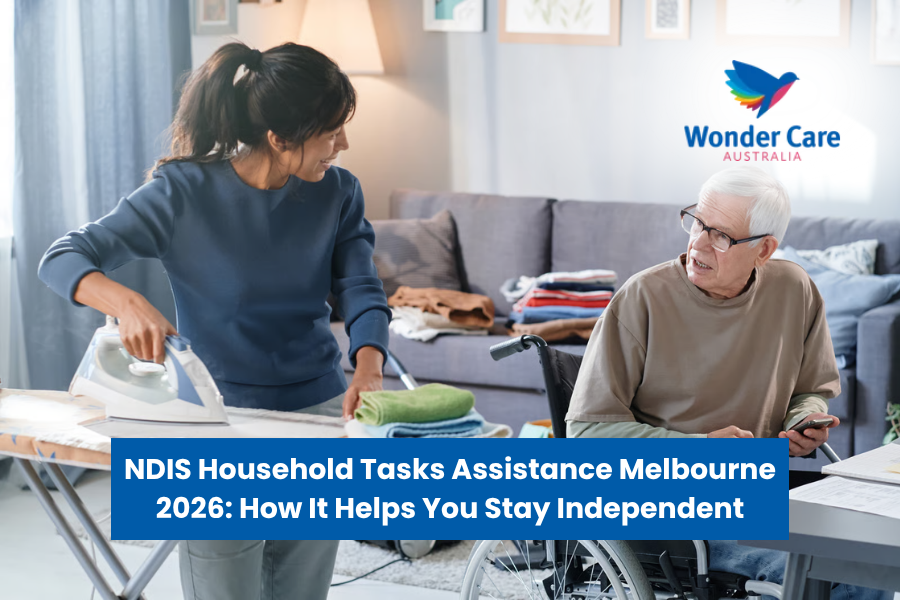
If you are living in Melbourne and navigating the NDIS in 2026, you have likely noticed that the NDIS landscape has evolved significantly. The focus is no longer just on getting through the day; it is genuine empowerment. While being active in the community is an essential part of overall wellbeing, everything really starts at home. For many of us, the biggest barrier to a great day isn’t a lack of motivation; it is the sheer physical and mental exhaustion of keeping a household running. Accessing NDIS household tasks in Melbourne is a highly impactful support. It is not about having someone come in to just simply fulfil a requirement; it is a strategic support system that ensures your home remains in a safe and comfortable environment. Whether you are in a flat in Brunswick, a family home in Glen Waverley, or out in the west, understanding how to use this support is an important factor in maintaining independence. Why Domestic Support Matters So Much Right Now The NDIS has evolved quite a bit lately. In 2026, the NDIA is putting greater emphasis on support that makes a difference in your daily quality of life. Domestic assistance is right at the top of that list. When your living space is well-managed, you suddenly have the energy to focus on other things, like your job, your studies, or just spending time with friends and family. The Melbourne Factor Living in a city like Melbourne offers many advantages, but it has its challenges. We have high-density living, complex waste systems, and a fast-paced lifestyle. The physical toll of keeping up with chores can be a lot to handle. NDIS household tasks in Melbourne help address these challenges, taking the essential tasks off your plate, so you can focus on the personal priorities. What Does Assistance with Household Tasks Actually Look Like? It’s important to understand what support is available. Usually, this is funded under your Core Supports, specifically in the Assistance with Daily Life category. It is there to make sure you are safe, healthy, and comfortable. Keeping the Place Sparkling A clean home is about more than just looks; it is about health. Professional cleaning services become essential for many individuals who experience mobility difficulties or breathing problems. This includes: The hard stuff: The bathroom and kitchen require scrubbing to maintain their hygienic condition. Floor care: The entire space requires vacuuming and mopping to eliminate slip hazards and trip hazards. The bits and pieces: Dusting and tidying create fresh and manageable spaces throughout your home. Taking the Stress Out of Mealtimes Food functions as energy for our bodies although its preparation process requires much effort. In 2026, cleaning meal prep laundry support is seen as a complete package. Your support worker can help with: Planning the week: You need to create a shopping list which meets both your budget restrictions and your dietary requirements. Getting ahead: You can simplify your cooking process by preparing your ingredients through chopping and peeling and portioning them or by cooking complete meals which you can reheat afterward. Cleaning up: The kitchen needs to remain clean and organized after all cooking activities are completed. Managing the Laundry Mountain The process of maintaining clean clothes throughout the week requires constant effort. This support includes: The whole process: process involves washing, drying, folding, and actual storage of clothes in their designated areas. Fresh linen: You need to change your bed sheets and towels which becomes difficult when you have restricted mobility. Looking your best: The process ensures that your clothing items receive proper ironing before you go to work or social events. Moving Toward Real Independence A key advantage of the 2026 NDIS approach is that it is not about making you dependent on others. It is about providing a scaffold so you can do more. This is where domestic help independence comes into play. Learning New Ways to Do Things A support worker needs to work with you during certain parts of their job. They will teach you how to operate new technology systems which include smart appliances and robot vacuum cleaners. You will develop personal confidence because this process helps you build your capacity to function at home. Smart Home Tech The technological capabilities which exist in 2026 present an amazing experience. Your support includes installing voice-activated lighting systems and intelligent home technologies which eliminate physical demands of daily activities. Your environment needs to support you while building your home needs between you and your requirements. The Mental Health Side of a Clean Home People usually concentrate on physical matters, but maintaining a clean home brings substantial mental benefits. The disorganized state of their residences causes Melburnians to experience extreme exhaustion. Cutting Down the Mental Load Your brain needs to keep track of every single dish which requires cleaning. People who experience chronic fatigue or neurodivergence face overwhelming situations. By having a solid system for daily living assistance, weight is lifted. You do not have to stress about bin night or whether you have clean clothes for an appointment; it is already taken care of. A Place to Recharge Your home needs to function as your personal sanctuary which provides protection from outside activities. The presence of clutter and filth transforms your space into a new source of anxiety. The presence of professional assistance transforms your residence into a tranquil environment which enables you to mentally concentrate on what matters most to you. How to Get This into Your NDIS Plan To get funding for NDIS household tasks in Melbourne, you need to show that it is reasonable and necessary. The key is to be really clear about how your disability makes these tasks difficult. Speak the Right Language Your planning meeting needs you to provide detailed information about your purpose. Your need for a cleaner requires you to explain the consequences of not hiring one. For example: Because of my fatigue, I cannot safely mop my floors, which makes my home unsafe and impacts my health. Get the Experts Involved In 2026, an Occupational Therapist (OT) is your best friend. They can do a Functional Capacity Assessment that proves exactly why you need NDIS assistance with household tasks in Melbourne. This kind of professional evidence makes the planning process much smoother. Choosing a Melbourne Provider, You Can Trust Melbourne is full of providers, but you want a provider who understands your needs. When you are looking at a team like Wonder Care Australia, there are a few things to keep in mind. Local Knowledge You want a provider that knows the area. Whether it is navigating the parking in South Yarra or knowing the bin schedules in Sunshine, that local knowledge makes a difference. You also want someone to be reliable. If a worker does not show up, it disrupts your routine. Respect and Communication Your home is your private space. You need someone who shows you respect by providing transparent communication. You should determine your desired employee type between a person who enjoys discussing work and a worker who handles tasks without engaging in conversation. Being Flexible in 2026 Support needs can change over time. You might need more help during a flare-up or less when you are feeling good. A great provider will be flexible enough to adjust your support to match the actual rhythm of your life. A Week in the Life: How Support Works To give you an idea of how this looks, let’s see how a typical week might go for someone with comprehensive support. The Monday Reset The week starts with a plan. The support worker helps with the groceries and gets everything organized. They spend some time on a deep clean of the kitchen and bathroom, so the house starts the week feeling fresh and tidy. Mid-Week Prep By Wednesday, the focus is on food. The worker helps prepare a few big meals for the fridge or freezer. This means you have healthy food ready to go on those days when you just don't have the energy to cook. While things are cooking, they might do a quick vacuum or a load of washing. The Friday Finish The last visit of the week is about getting ready for the weekend. The bed sheets are changed, the laundry is put away, and the bins are put out. The house is left in a state where you can actually relax and enjoy your time off. It Is Okay to Ask for Help There is a bit of an Aussie do-it-yourself attitude that can sometimes stop us from asking for help. But in the NDIS, asking for domestic support is a smart move. By using NDIS household tasks in Melbourne, you are not giving up. You are making a choice to use your energy on the things that actually fulfill you. It is about dignity, safety, and having the freedom to live your life your way. How Wonder Care Australia Can Help At Wonder Care Australia, we have been part of the NDIS journey for a long time. we know that every Melbourne home is unique, and we treat it that way. Support That Fits You We don't do cookie-cutter support. We talk to you to find out exactly what is causing the most stress, whether it is the laundry, the cleaning, or the cooking, and we build a plan that works for you. Great People Our workers are local, vetted, and genuinely care about what they do. They are there to support your independence and make sure your home stays exactly the way you like it. Wrapping Up: A Brighter Way Forward Living in Melbourne in 2026 should be about enjoying everything this city has to offer. By getting your NDIS household tasks in Melbourne sorted, you are building a solid foundation for your future. It is about more than just chores. It is about having a home that works for you, giving you the freedom to thrive. If you are ready to take that step, we are here to help. Do you want to chat about your home support?  If you are looking for reliable, professional NDIS assistance with household tasks in Melbourne, the team at Wonder Care Australia is ready to go. We have the experience to help you navigate your plan and the heart to make sure your home stays a place you love. Contact Wonder Care Australia today. Let’s get your home life sorted so you can focus on what is next.
By Wonder Care Australia Pty Ltd ClientGdayBroadcast April 1, 2026
Navigating disability support in the Sunshine State can feel a bit like trekking through the Great Dividing Range without a map. With the NDIS landscape shifting, new legislative changes rolling out through 2026, and a sea of providers stretching from the Gold Coast to the Darling Downs, finding the right fit for your life is a massive call to make. Whether you’re in the heart of Toowoomba, the busy streets of Brisbane, or up in the coastal reaches of Townsville, you deserve support that does more than just "tick a box." It should actually empower you to live life on your own terms. In Queensland, the NDIS has opened a world of choice and control, but that choice brings the responsibility of vetting disability support services in Queensland to make sure they’re truly "fair dinkum" about your progress. At Wonder Care Australia, we don’t reckon "care" is a one-size-fits-all product. To us, it’s a partnership. In this deep dive, we’re going to walk you through how to spot a top-tier provider, help you make sense of the 2026 NDIS "New Framework" updates, and ensure your support team is just as backed-in to your goals as you are. 1. The State of Disability Support in Queensland (2026) The Queensland disability sector is undergoing a major change as we pass through 2026. The introduction of the Queensland Disability Service Plan 2026–2029 has put a lot of emphasis on inclusive homes, community attitudes, and economic security of the participants. A Growing Community According to current statistics, more than one-fifth of the Queensland population 11% has a disabled person and offers some type of unpaid care. Professional sector is changing to accommodate this demand and the numbers in the professional sector are projected to grow dramatically by the close of the year 2026 so that a better life by fulfilling their full potential is achievable by the one in five Queenslanders with a disability. Why Choosing a Local Provider Matters While large national agencies exist, many Queenslanders are returning to local disability care providers in QLD. Local knowledge is irreplaceable. A provider based in Toowoomba, for instance, knows the most accessible spots at the Carnival of Flowers, the local Council Cab services, and the specific allied health networks that have availability in the Darling Downs region. 2. Navigating the 2026 NDIS "New Framework" Planning If you’ve been feeling a bit "under the pump" with NDIS paperwork lately, you’re not alone. The 2026 reforms have introduced a "New Way of Planning" that every participant should understand. The Mid-2026 Rollout Since mid-2026, the NDIS planning process will be altered to be more uniform and equal. It is called the New Framework Planning and is based upon your overall disability support needs, and not just a medical diagnosis. Key benefits promised include: Longer Plan Periods: Giving you more certainty and fewer stressful annual reviews. Flexible Budgets: Moving away from rigid line items to allow you more choice in how you spend your funding. Needs-Based Assessments: Using person-centred tools like the I-CAN v6 to determine fair funding levels. Funding Periods and Budgeting A major change currently rolling out is the use of three-month funding periods. Instead of getting your whole budget at once, it is released in cycles to help with consistent management. At Wonder Care Australia, we help our clients navigate these cycles, so they never run out of support when they need it most. 3. Identifying High-Quality NDIS Support Services in Queensland When you’re shortlisting potential partners, you need to look beyond the shiny brochures. You are inviting people into your home and your life; that requires a high level of trust. Registered NDIS Providers in Queensland vs. Unregistered Choosing registered NDIS providers in Queensland offers a critical safety net. In 2026, with increased fraud crackdowns, registration is becoming the "gold standard" for safety. Registered providers are: Audited: Undergoing regular independent checks of safety standards. Endorsed: You can now "endorse" your preferred provider directly through the NDIS PACE portal for faster payments and better security. Accountable: Adhering to the NDIS Quality and Safeguards Commission’s strict standards. The Staff Match Test The best disability support services in Queensland don't just send "whoever is on shift." They look at your interests. If you’re a quiet person who enjoys the Brightside Day Centre in Toowoomba, they shouldn't send someone who only wants to take you to loud, crowded events. 4. Supported Independent Living (SIL) in QLD: The 2026 Standard For many Queenslanders, the goal is to move out of the family home and into a space of their own. Supported independent living in QLD (SIL) is the NDIS funding that makes this possible. SIL Trends: More Than Just a House In 2026, we are seeing a move toward Inclusive Homes and Communities. This means: Compatibility First: It is necessary to ensure that housemates of shared living setups are compatible and have common lifestyles. Technology Integration: Implementation of smart home technology to enable participants to manage their own environment, including lighting and air conditioning. Community Proximity: You do not have to be far off your community since SIL homes are near local parks and have access to public transport. 5. Beyond Care: Disability Assistance Programs and Skill Building Quality support isn't just about doing things for you. It’s about the Capacity Building. In 2026, the most successful disability assistance programs are those that focus on helping you do things for yourself . Essential Life Skills A great provider will help you develop: Financial Independence: Learning how to manage a budget or use the NDIS portal. Travel Training: To gain confidence in using the Toowoomba Council Cab or local buses. Employment Pathways: To get meaningful work with the local employers through Working with Disability Employment Services (DES). Community Participation Queensland is far too beautiful to stay indoors. Your provider should be your greatest advocate in getting you out and about whether it is by attending the Toowoomba Disability Expo or by being part of Disability Action Week. 6. Understanding 2025-2026 NDIS Pricing Changes You should keep yourself updated regarding what your budget will be purchased. Currently, the most recent 2025-26 Pricing Arrangements are: Wage Increases: Support worker rates have seen a modest increase (around 3.95%) to account for wage and superannuation rises. National Pricing: Many therapy supports (like Psychology) now have a single national price, which has increased the price limit for Queenslanders in some categories. Travel Caps: New rules for 2026 clarify that therapist travel is often capped at 50% of the hourly rate, helping your budget last longer. 7. The Wonder Care Difference: Serving Toowoomba and Beyond At Wonder Care Australia, we don’t just see participants; we see people with aspirations. Based in Toowoomba and serving the wider Queensland region, we’ve built our reputation on being approachable, reliable, and deeply committed to the NDIS goal of independence. Our Range of Services We offer a holistic suite of disability support services in Queensland, including: Personal Care: Assistance with daily routines to keep you healthy and comfortable. SIL Management: Specialist help to live safely in your own home. Community Access: Tailored social groups to help you make friends and learn new skills. Nursing Supports: High-intensity care delivered by qualified professionals. Why Our Clients Stay We pride ourselves on being local. We aren't a faceless call centre. When you call Wonder Care, you’re talking to people who walk the same streets in Toowoomba and genuinely care about your success. 8. How to Choose the Right Provider: A Checklist for Queenslanders When you sit down with a potential provider, use this "fair dinkum" checklist:
By Wonder Care Australia Pty Ltd ClientGdayBroadcast March 24, 2026
If you’ve spent any time lately looking into disability support services in Australia, you’ve probably noticed that the ground is shifting. Between the new "Back on Track" reforms and the changes rolling out through 2025 and 2026, it’s not just about "getting a plan" anymore. It’s about navigating a whole new framework that’s supposed to make things fairer and more transparent, even if it feels a bit like a maze right now. At Wonder Care Australia, we’re locals through and through. Our office and business is just here in Toowoomba, out to the Kearneys Spring and all the way to Middle Ridge. We are the first people to understand that there is a face behind every NDIS figure, big dreams, and a new tale. This is the very reason why we prepared this in-depth guide. Our mission is to ensure that you bypass the red tape, avoid the jargon, and make the system work as you expect rather than the other way round. What Exactly are Disability Support Services in Australia? In the most basic understanding, disability support services in Australia are the tools, individuals and therapy, which assist you in researching a normal life. However, a far more restrictive definition of what the NDIS will pay was introduced by the government since October 2024. The NDIS now has an allowed List and a banned List. What’s In: Personal care, communal access, special treatments (such as OT or talk therapy), and equipment that is directly connected to your impairment. What’s Out: General lifestyle expenses. You can’t use NDIS funds for your weekend groceries, your Netflix sub, or your rent. The goal is to ensure the scheme is sustainable, so it’s here for the long haul. At Wonder Care, we also sift through such lists, and you will never have to fear a non-compliant invoice. Who is Eligible for Disability Support Services in Australia? Before you can start picking out support workers or booking therapies, you have to pass the "Access" gate. In 2026, the NDIA (National Disability Insurance Agency) has refined this process to focus more on your impairment notice. 1. The Basic Requirements To be eligible for NDIS-funded disability support services in Australia, you must: Be aged between 7 and 64 when you apply. Be an Australian citizen or hold a permanent visa. Live in Australia. 2. The Functional Capacity Test It’s not just about having a diagnosis. The NDIA wants to see that your disability is permanent and significant. This means it has a major impact on your ability to: Communicate: Understanding others or being understood. Socialise: Making friends or being part of the community. Learn: Picking up new skills or remembering information. Transport: Getting about your home or CBD Toowoomba. Care for Yourself: Take a shower, eat, or take care of yourself. How to Access Disability Support Services in Australia: The 2026 Roadmap When it comes to the first-time applications in 2026, the process is slightly different than it was several years ago. Here is the step-by-step path: Step 1: The Initial Request You can refer to your Local Area Coordinator (LAC) or the NDIS itself. They will give you an Access Request Form. This is your "golden ticket" to the scheme. Step 2: Gathering the Right Evidence In the past, people spent thousands on private reports. Today, the NDIA is moving toward a more streamlined approach. However, you still need your GP or a specialist to fill out a "Functional Impact" report. Aussie Pro-Tip: Don’t just list your symptoms. Be honest about your "worst days." If you can’t get out of bed without help on a bad day, the NDIA needs to know that to fund your support properly. Step 3: The Support Needs Assessment (The "New Framework") From mid-2026, most participants are moving to New Framework Planning. Instead of a "planning meeting" where you haggle over every dollar, you’ll have a Support Needs Assessment. A trained assessor will have a chat with you about your life and use a tool called the I-CAN v6 to figure out a "flexible budget" for you. Breaking Down the Types of Disability Support Available in Australia Under the new 2026 framework, your plan will likely be split into two main buckets: Stated Supports and your Flexible Budget. 1. The Flexible Budget This is the money you can move around as you see fit. It usually covers: Daily Life: Someone to help you get ready in the morning or help with the "boring" stuff like laundry and cleaning. Social Participation: This is where the fun happens. Want to head to a Toowoomba Titans game or join a local pottery class? Your support worker’s time comes out of this bucket. Consumables: Low-cost items like continence pads or specialized eating utensils. 2. Stated Supports These are specific funds that can only be used for what’s written on the tin. Support Coordination: An expert (like the ones we work with) who helps you find the best providers in Toowoomba. High-Cost Technology: If you need a $15,000 power wheelchair, it will be a "stated" item. Home Modifications: Installing a ramp or a wet-room bathroom. The Power of a Disability Services and Legal Center What happens if the NDIS says "No" to your access request? Or what if your new 2026 budget is way too small to cover your needs? You don't just have to cop it on the chin. A disability services and legal center is your best friend at these moments. In Australia, organizations like the Australian Centre for Disability Law or Legal Aid provide free advocacy. Internal Reviews: They help you gather the evidence to ask the NDIA to look at their decision again. The ART (Administrative Review Tribunal): If the internal review doesn't work, you can go to the ART. A legal center can help represent you, ensuring you aren't bullied by a big government department. Remember, the NDIS is legally required to fund "reasonable and necessary" support. If you aren't getting it, these legal centers make sure your voice is heard. Navigating the NDIS as a CALD Participant Toowoomba is a greatly diverse town. We are aware that to many our neighbors, English is not the language of home. This may render the NDIS twice as difficult to maneuver. At Wonder Care Australia, we pride ourselves on being a multicultural team. We also have personnel who speak both Arabic and Dinka, and it implies that we will be able to describe the complex reforms that will come in 2026 in a manner that will make sense. We think that disability support services in Australia ought to be open to all people regardless of the place of birth or language of speech. Why Wonder Care is Toowoomba’s Preferred Choice We aren't a big, cold corporation. We’re a team of passionate locals who believe that "support beyond boundaries" isn’t just a slogan; it’s how we operate. We Know Toowoomba: From finding the most accessible spots at Picnic Point to knowing which GPs in the CBD are great with NDIS paperwork, our local knowledge saves you time and stress. 1:1 Personalised Matching: We don't just send the first available person. We look for a support worker who matches your personality. If you love footy, we’ll try to find a footy fan to support you. Registered for Peace of Mind: We are a Registered NDIS Provider. This means we meet the highest safety and quality standards in the country. Whether you are Agency-managed, Plan-managed, or Self-managed, you can work with us. Maximising Your Support: Tips for the 2026 Transition As we move fully into the 2026 New Framework, here are three things you should do right now: Check Your Impairment Notice: Ensure the NDIA has listed all your conditions correctly. If a condition isn't on that notice, you might not be able to spend money on support for it. Move to 3-Month Funding Periods: The NDIS is moving toward "funding periods" to help people pace their spending. Make sure you have a plan for how to use your funds, so you don't run out by month two! Use a Plan Manager: With the new "debt recovery" rules, having a Plan Manager is like having a professional accountant in your corner. They’ll flag if you’re trying to buy something on the "Banned List" before you get into trouble with the NDIA. Conclusion Navigating disability support services in Australia in 2026 might feel like a lot to take in, but the heart of the scheme remains the same: helping you live the life you choose. Whether you need help with the daily grind, want to get out and about in Toowoomba, or need help understanding the latest legislation, Wonder Care Australia is here. You don’t have to do this alone. Let’s sit down, have a cuppa, and figure out how to make your NDIS plan work for you. Ready to get started? Contact our friendly Toowoomba team today. We’re located at 140 Mort Street, Toowoomba, or you can give us a ring on 07 2143 5971. Book a Free NDIS Consultation with Wonder Care Frequently Asked Questions 1. What are the current NDIS price limits for support workers in 2026? As of late 2025 and into 2026, the NDIS price limit for standard weekday daytime support is $70.23 per hour. If you require high-intensity support, the rate is $73.08. At Wonder Care, we stick strictly to the NDIS Pricing Arrangements to ensure your budget is managed fairly and transparently. 2. How does the New Framework Planning affect my Toowoomba NDIS plan? The 2026 rollout of "New Framework Planning" means the NDIA is moving away from rigid line items. Instead of having a specific "bucket" for every tiny task, most participants now receive a Flexible Budget. This allows you to choose how to spend your funds across different core supports as your needs change throughout the year. 3. I have a Good Day with my mental health; will I lose my NDIS funding? No. A common worry with psychosocial disability is that feeling "well" during an assessment will lead to a funding cut. In 2026, the NDIA assessors are trained to look at your functional capacity over time, not just how you feel on the day of the meeting. We help our Toowoomba participants document their "fluctuating needs" so their funding remains stable. 4. What is the Allowed List and can I buy a smartwatch with my NDIS funds? Following the 2024–2025 reforms, the NDIS now has a strict list of "allowable" supports. A standard smartwatch for checking texts? No. But a specialised wearable device designed to monitor falls or provide sensory regulation? Yes, provided it’s linked to your disability goals. We can help you check if an item is "Allowed" before you buy. 5. Can I use my NDIS funding for Foundational Supports in Queensland? By late 2026, the Queensland government is rolling out Foundational Supports for people who don’t meet the full NDIS requirements (especially children under 9). If you are already on the NDIS, you’ll continue to receive your individualised plan, but you may also access these new community-based services alongside your current support.  6. Why should I choose a Registered Provider like Wonder Care over an independent contractor? With the 2026 Mandatory Registration rules approaching for SIL and high-intensity care, using a registered provider like Wonder Care Australia gives you an extra safety net. We undergo regular audits, our staff have cleared all NDIS Worker Screenings, and we handle the complex debt recovery compliance, so you don't have to.